
.gif)
A curated collection of the early web — the weird, the wonderful, and the deeply personal.
This is a living archive of internet culture from the late 90s through the mid-2000s.
Not tools. Not frameworks.
Just the web as it felt.
- 🧠 What is this?
- 🌐 Internet Platforms & Portals
- 🔎 Search Engines (Before Google Took Over)
- 💬 Communication & Social
- 🧍♀️ How We Used the Internet
- 💿 Internet Distribution & Access
- 🎨 Web Features & Aesthetics
- 🎮 Games & Online Worlds
- 📦 E-Commerce & Services (Early Days)
- 🧠 Discovery, Curation & Feeds
- 🧠 Web Design & Standards
- 🕳️ The Wild / Edgy Web
- 🔞 Adult & NSFW Internet
- 🏴☠️ File Sharing & Underground Web
- 📼 Media & Viral Culture
- 🧪 Preservation & Revival
- 🌐 Iconic / Experimental Websites
- 📚 Knowledge & Information
- 🧭 Navigation & Utility
- 🧠 Personalization & Dashboards
- 📰 News, Blogs & Internet Discourse
- 🎧 Music, Streaming & Discovery
- 📝 Content Farms & Early SEO
- 💰 Make Money Online
- 💌 Personal & Human Internet
- 🧪 Recreate This
- 🤝 Contributing
- 🪄 How to Contribute
- 🌐 Why this exists
- ⭐ Support
Awesome Web Nostalgia is part inspiration, part preservation.
It exists to document:
- iconic websites
- forgotten tools
- design trends
- interactive experiences
- and the small, strange details that defined the early internet
Whether you're here to remember, study, or recreate — you're in the right place.
- Yahoo! — The homepage of the early internet: news, email, directories, and everything in between
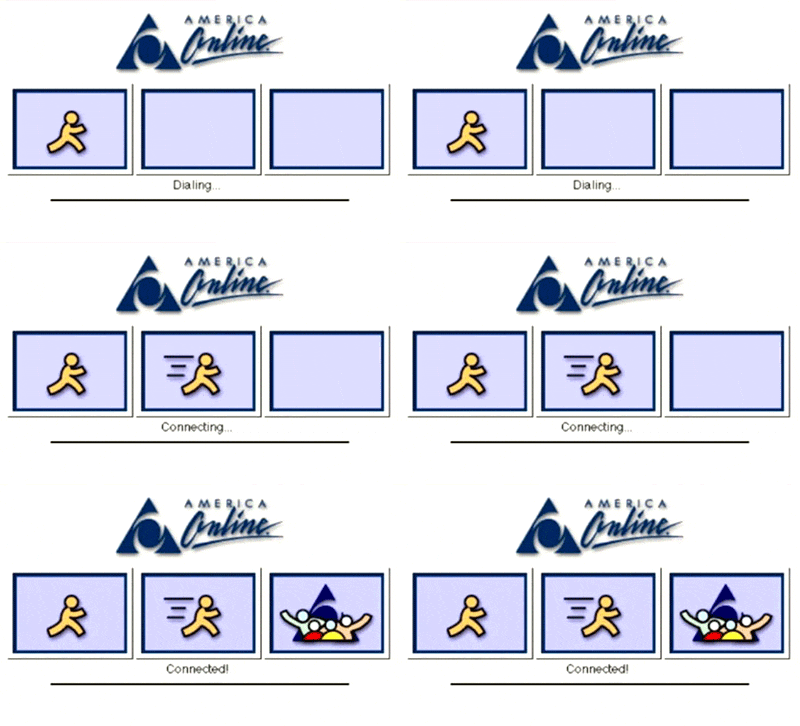
- AOL — Brought millions online with CDs in the mail, chatrooms, and “You’ve got mail”
- WebTV — Early attempt to bring the web to living rooms via television
- AltaVista — One of the fastest and most powerful search engines of the 90s
- Ask Jeeves — Let users ask questions in plain English, answered by a butler
- Lycos — A major early web portal and search engine
- Instant Messaging — AIM, MSN, Yahoo Messenger: status messages, buddy lists, and late-night conversations
- Chatrooms — The chaotic, anonymous social hubs of early internet culture
- Hotmail — One of the first widely used free web-based email services
- MySpace — A chaotic, customizable social network where your profile was your personality
- Guestbooks — Public message logs where visitors could leave notes on your site
- Skype — Early internet calling that made long-distance communication feel free and instant
- LiveJournal — Blogging platform centered around personal posts, communities, and digital journaling
- Forums — Threaded discussions, avatars, signatures, and tightly-knit communities
- Xanga — Early blogging platform blending journaling, social interaction, and custom layouts
- Flickr — Photo-sharing platform that helped define early social media and visual culture
- A/S/L? (Age/Sex/Location) — A universal opener in early chatrooms, often the first question before any real conversation
- LOL (Laughing Out Loud) — A foundational way to signal humor or soften tone in text
- ROFL (Rolling On the Floor Laughing) — The exaggerated version of “LOL,” used for emphasis
- Away Messages — Carefully crafted status updates that doubled as emotional expression or coded communication
- Buddy Lists — The social graph before “followers,” where presence (online/offline) actually mattered
- “You’ve Got Mail” — The iconic notification voice from AOL
- AOL Free Trial Discs — Mass-mailed CDs that brought millions online (and somehow never stopped arriving)
- Dial-Up Internet — The sound. The waiting. The disconnections
- DSL — The first taste of “always-on” internet that felt impossibly fast
- Under Construction Pages — A universal symbol of unfinished ambition
- Visitor Counters — “You are visitor #000123”
- Glitter Text & GIFs — Flashy, animated, impossible to ignore
- Marquee Text —
<marquee>scrolling messages everywhere - Tiled Backgrounds — Patterns repeated infinitely across the page
- MIDI Background Music — Tiny, looping soundtracks embedded directly into webpages
- Neopets — A virtual pet world blending games, economy, and community
- The Sims — A life simulation game that blurred the line between gaming and digital storytelling
- Addicting Games — One of the go-to hubs for quick, addictive browser-based games
- Miniclip — Massive collection of browser games, from simple puzzles to early multiplayer hits
- Newgrounds — A legendary platform for Flash games, animations, and independent creators
- Mochi Media — Flash game publisher that provided in-game advertising for game creators
- Not Doppler — A curated Flash game portal known for hosting high-quality, polished browser games with a cleaner, more selective approach
- Kongregate — A major browser gaming platform that introduced accounts, badges, chat, and progression systems—bringing a social layer to Flash games
- Armor Games — A publisher and portal known for high-quality Flash games with distinctive art styles and deeper gameplay experiences
- Amazon — Once just an online bookstore, now a global marketplace
- Netflix (DVDs by Mail) — Before streaming, DVDs arrived in red envelopes
- eBay — Online auctions that made buying and selling feel like a game
- PayPal — A foundational tool for sending money online and enabling early internet commerce
- Craigslist — Minimalist classifieds for jobs, housing, personals, and everything in between
- ThinkGeek — Online store for niche, nerdy, and internet culture merchandise
- StumbleUpon — Randomized web discovery that made browsing feel like exploration
- Polyvore — Visual collage platform for fashion, design, and curated aesthetics
- Squidoo — User-generated topic pages blending blogging, curation, and monetization
- Google Reader — RSS feed reader that gave users control over how they consumed content
- Del.icio.us — Social bookmarking site that let users tag, organize, and share links
- Go2Web20.net — A massive, tag-based directory of Web 2.0 apps where you could explore thousands of tools by category, popularity, and recency. It made the exploding ecosystem of early social/web apps feel navigable and discoverable
- A List Apart — Influential publication shaping early web standards and design thinking
- W3Schools — A go-to resource for learning HTML, CSS, and basic web development (often a first stop for beginners)
- Microformats — Early attempts to structure data within HTML before modern APIs
- Smashing Magazine — One of the most influential web design blogs of the late 2000s, publishing tutorials, UX insights, and design trends that shaped modern front-end development
- Six Revisions — A popular blog offering web design tutorials, coding techniques, and inspiration for both designers and developers
- Noupe — A web design magazine featuring tutorials, resources, and inspiration during the height of the Web 2.0 era
- Web Creme — A curated gallery showcasing clean, modern web design trends, often highlighting minimal and polished layouts
- Jeffrey Zeldman — A central figure in the web standards movement whose writing and advocacy helped shape modern, semantic, and accessible web design
- Rotten.com — Infamous for graphic and controversial content
- The Pirate Bay — A central hub for torrent culture and digital piracy
- 4chan — Anonymous imageboard that influenced meme culture and internet subcultures
- Goatse — Infamous shock image often referenced as an early example of the internet’s more extreme and unfiltered side
- ExtraLunchMoney.com — Early adult-themed gig platform, before OnlyFans years later.
- Torrents — Peer-to-peer file sharing that reshaped how media was distributed
- Napster — The original peer-to-peer music sharing platform that disrupted the industry
- KaZaa — A widely used file-sharing network that followed Napster’s rise and fall
- LimeWire — One of the most recognizable P2P clients for downloading music and media
- Memes — Before algorithms, memes spread organically through forums, email, and niche sites
- I Can Has Cheezburger? — A central hub for LOLcats and early caption-based meme culture
- FAIL Blog — Popularized the “fail” format and curated user-submitted internet mishaps
- All Your Base Are Belong to Us — Early viral meme originating from a mistranslated video game cutscene
- BuzzFeed — Early viral content factory that helped define shareable internet culture
- RottenTomatoes.com — Aggregated movie reviews that influenced how audiences judged films
- Wayback Machine — A time machine for browsing archived versions of websites
- BlueMaxima's Flashpoint — Massive archive preserving Flash games and animations
- Purple.com — A single-color page that became a strangely memorable internet artifact
- Wikipedia — A collaborative encyclopedia that redefined how information is created and consumed
- MapQuest — Printed directions and early digital maps before GPS and smartphones
- AZLyrics — A go-to site for quickly finding song lyrics (often questionably sourced)
- The Death Clock — A darkly humorous site predicting your “time of death” based on simple inputs
- RetailMeNot — Coupon and deal aggregation for online shopping
- iGoogle — Customizable homepage with widgets, news, weather, and personal feeds
- Slashdot — “News for nerds” — one of the earliest tech news aggregation and discussion communities
- The Huffington Post — Early major blog/news hybrid that helped define digital media publishing
- How-To Geek — Practical tech tutorials and explainers for everyday users
- Digg — Social news aggregation where users voted content to the front page
- Fark — Community-driven link sharing with humorous, sarcastic headlines
- Technorati — Early blog search engine and authority ranking system
- AllTop — Curated lists of top blogs and sites across categories
- Last.fm — Music tracking and recommendation service based on listening habits
- Grooveshark — Early music streaming platform with user-uploaded content
- eZineArticles — Article directory used heavily for SEO and content marketing in the early web
- Demand Media (Content Network) — Parent company behind eHow and other large-scale content production efforts
- InfoBarrel — Revenue-sharing article platform similar to HubPages
- Examiner.com — Local “experts” writing SEO-driven articles tied to cities and niches
- Helium — Paid writing platform with rating systems and revenue sharing
- Buzzle — General article directory heavily used for SEO backlinks
- HubPages — User-generated articles monetized through ads and affiliate links
- eHow — One of the most infamous content farms, producing massive volumes of how-to articles optimized for search traffic
- Associated Content — Paid contributors small amounts per article; later acquired by Yahoo and became Yahoo Voices
- Fiverr — A marketplace for digital services where users offer fixed-price gigs, helping popularize the “$5 service” model and making freelancing more accessible
- Elance — One of the earliest major freelance marketplaces connecting clients with remote workers for project-based work (later merged into Upwork)
- oDesk — A platform focused on hourly remote work and long-term contracts, eventually merging with Elance to form Upwork
- Freelancer — A global freelance marketplace built around competitive bidding for projects across design, development, and writing
- Amazon Mechanical Turk — A crowdsourcing platform where users complete small tasks (“HITs”) for micro-payments
- ClickBank — A major affiliate marketplace for digital products, widely used for earning commissions through online marketing
- Etsy — A marketplace for handmade, vintage, and creative goods that enabled independent creators to sell directly to customers
- CafePress — A print-on-demand platform allowing users to upload designs and sell them on merchandise like shirts, mugs, and accessories
- Zazzle — Another print-on-demand marketplace where creators could design and sell custom products without holding inventory
- PostSecret — Anonymous postcard confessions that revealed the emotional, vulnerable side of the internet
A space for rebuilding nostalgic elements using modern tools.
- CSS recreations of classic UI patterns
- Retro-inspired components
- Mini tools that bring old web features back
(Want to contribute something here? Please do.)
Contributions are welcome from everyone, not just developers.
You don’t need to know Git deeply — even a simple link is valuable.
- A website, tool, or artifact
- A short description (what it was + why it mattered)
- Archive links if the original is gone
- Keep entries concise but meaningful
- Add context, not just links
- Prefer archived versions when possible (e.g. Wayback Machine)
- Place items in the most relevant category
- Fork this repo
- Add your entry
- Open a Pull Request
That’s it.
If this is your first PR ever — even better.
The early web was messy, expressive, and deeply human.
Before optimization. Before platforms took over.
People made websites just because they could.
This repo is an attempt to preserve that spirit.
If this brings back memories or inspires something new, consider giving it a star.